
Context
630 days. 1,260 hours.
This is the time I had spent riding public transit within the previous 2 years of starting this project. During that time, I noticed gaps in the system, and was inspired to design an app to enhance the commuting experience.
1 // Research Phase
Listening to the voices of frequent commuters
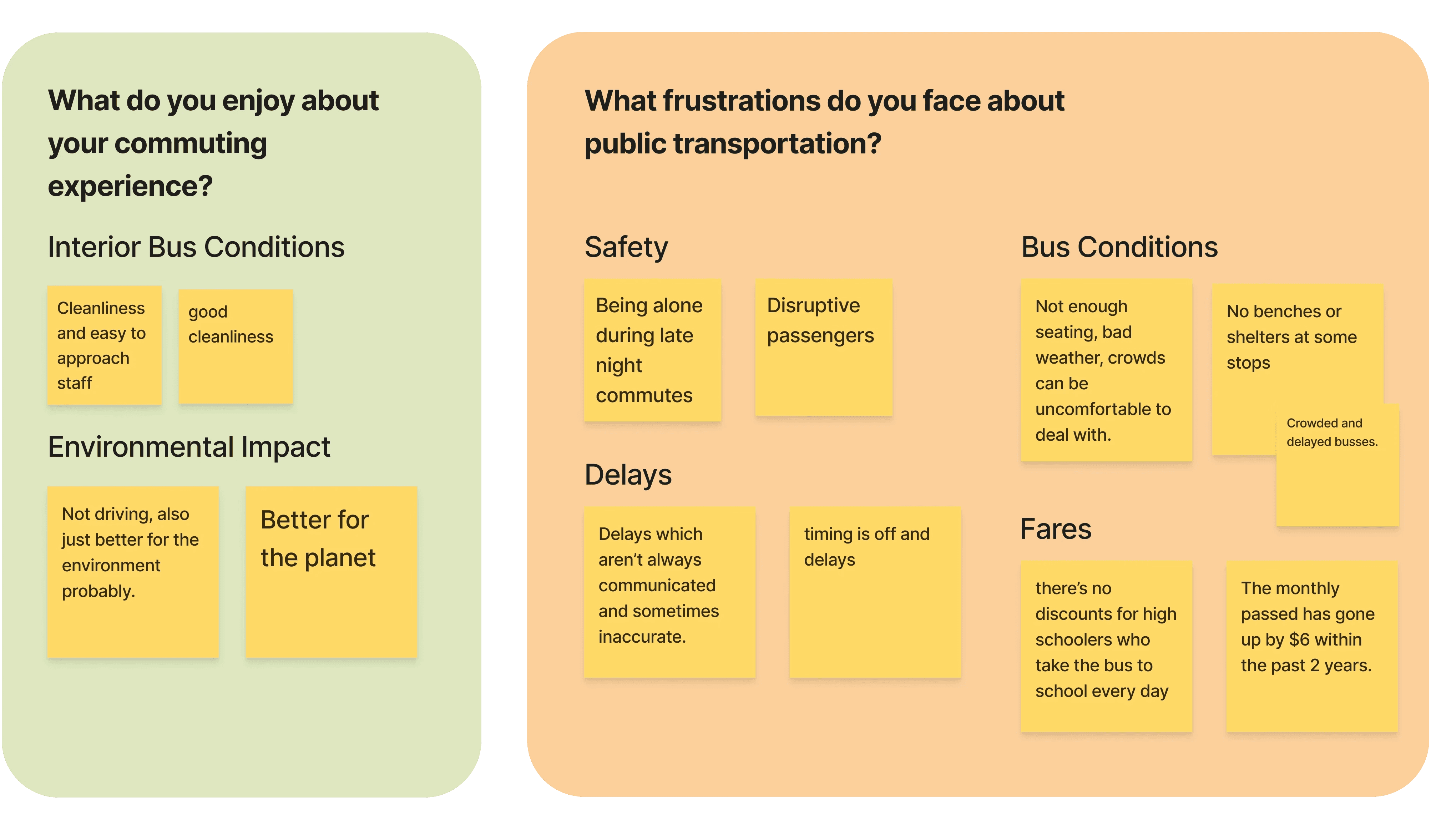
Using surveys and secondary research, I gathered data from a community of people that frequently rely on public transit: 10 university students. I focused on topics such as safety, affordability, and overall satisfaction and sorted common viewpoints on an affinity map.
Key Takeways
Absence of Incentives
Rising fares and lack of incentives discourage consistent use of public transportation.
Lack of Safety
60% of responders have reported feeling unsafe on their trip.
Feeling unheard
100% of commuters had frustrations, but 80% of them have never reported their concerns.
Problem
Rising fares without incentives, a lack of safety connections, and the absence of a centralized discussion platform leave commuters feeling frustrated, unsafe, and unheard, discouraging public transportation use.
2 // Defining Phase
How could I address the lack of incentives for riding public transits?
Add a rewards system where riders earn virtual trees (points) for using transit, redeemable for free ride passes.
Partner with local businesses to offer discounts or gift cards once riders hit a trip milestone.
Why virtual trees?
Learning From Montreal’s Transit Initiative
Virtual trees were implemented by Montreal’s transit system app, where users were told one round trip by bus was equal to the environmental benefits of a tree over a year.
As a result, 5,000 users increased their public transit use, and 43% began using it for new purposes such as weekend outings
What would make commuters feel safer?
Imagine being on a late-night commute, having a companion that you share a schedule with would make that situation a lot less isolating.
Implementing a bus buddy program that matches commuters with others on similar routes can help create that sense of shared travel.
How can we ensure riders' voices are being heard?
Include a community forum where users can share their commuting experiences through photos, reviews and interacting with others posts, ensuring their voices are being heard.
Why not just a feedback form?
Once you submit, you never know if someone's actually on the other end reading it.
The community forums would be different. They create visibility and connection by allowing riders to share photos, reviews, and commuting experiences while engaging with others.
Information Architecture
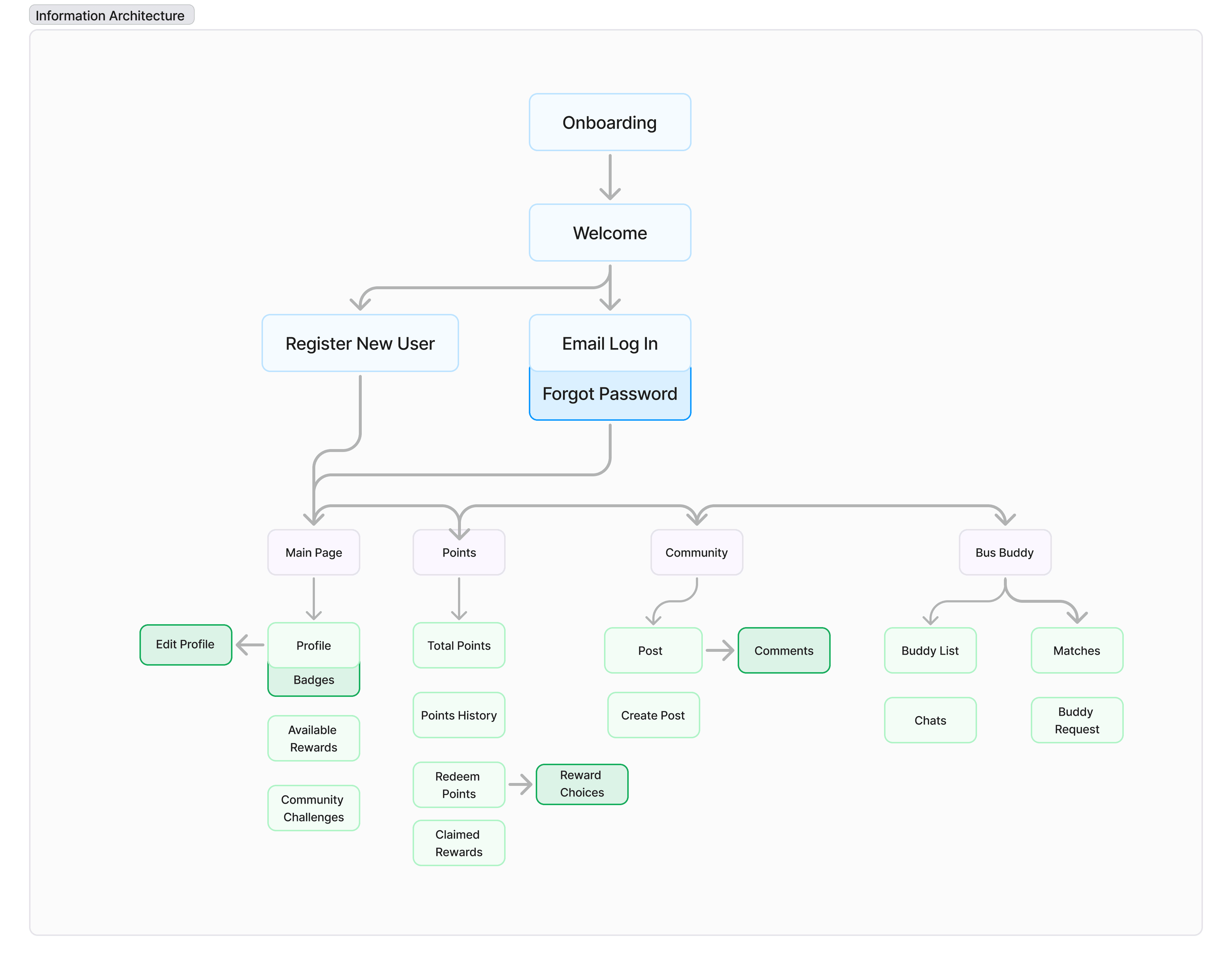
Based on the conclusions, I mapped out the general navigation flow of the app, as well as some lo-fi wireframes. I focused it on these 4 features:
Homepage displaying rewards & community challenges
A wallet section where users can see the amount of points they've collected
Community forum section for feedback and discussions
Bus Buddy page where commuters can connect with other riders they share routes with


3 // Testing and Refinement Phase
Usability Testing
After designing the screens, I conducted interviews with 3 frequent commuters on their opinion of the app's features and any suggestions for improvement to identify any strengths and weaknesses.

Key Changes
Users struggled with navigating to a different page
2 users during testing said they were unsure how to switch to different pages, revealing that the navigation bar needed clearer visual cues.
In response, I increased the size of the icons and used stronger colours to make navigation more noticeable and easier to use.
The homepage lacked positive reinforcement
This is the first screen that users see when they open the app, yet users noted that the home page felt overly informational and lacked encouraging elements.
So, I redesigned the experience by adding positive messaging and achievement-based feedback to create a more motivating first impression.
4 // Final Design
Functional Prototype

6 // Reflection
Next Steps
As my initial research and testing phase focused on the perspectives of university students on transit, I plan to reach a broader demographic of commuters in my city through digital surveys, ensuring the app addresses diverse needs and experiences.
Personal Takeaways
What began as frustration with my city’s public transit evolved into a much larger project, where I engaged in the full cycle of research, design, and testing. Along the way, I discovered how much I enjoy user research and, most importantly, learned how empathy drives better design by revealing users’ true needs and perspectives!